Street weeding 2026 trial details
As standard practice across the borough, street cleaning operatives should remove all weeds over 10cm tall from highway pavements.
Rotating wire brushes mounted on lorries remove weeds and detritus from the channels. We also spray glyphosate on local highways, excluding tree pits, three times a year to help control weed growth.
We're seeking to reduce or eliminate the use of herbicides by testing different approaches in the hope of identifying a cost-effective and practicable alternative.
How the trials work
Building on the 2024 trials, we're running two more trials beginning in the 2026 growing season.
These are in limited areas to test alternative approaches that could help limit the use of glyphosate and other chemical herbicides.
Trial length
These trials will run for 12 months initially, with scope to continue into subsequent years pending review.
What we'll monitor
We'll closely monitor levels of plant growth on streets in the trial areas with a focus on potentially problematic weeds, such as those liable to form slip or trip hazards, obstructions, block drainage or damage the highway surface with their roots.
We'll compare levels with similar streets outside the trial areas.
Impact
The results of these trials will help to inform our future decisions on how best to control unwanted plant growth on local streets.
Future glyphosate use
Glyphosate is currently approved for use in the UK until 15 December, 2026. This deadline was extended to enable the UK Health and Safety Executive (HSE) to complete a full scientific safety assessment and public consultation.
Trial approach one
Approach: No chemical weedkiller
This trial will take a wholly manual and mechanical approach to weed removal. This will include increased manual removal for pavements using additional contractor resources dedicated to this task.
The trial commenced in the first week of August.
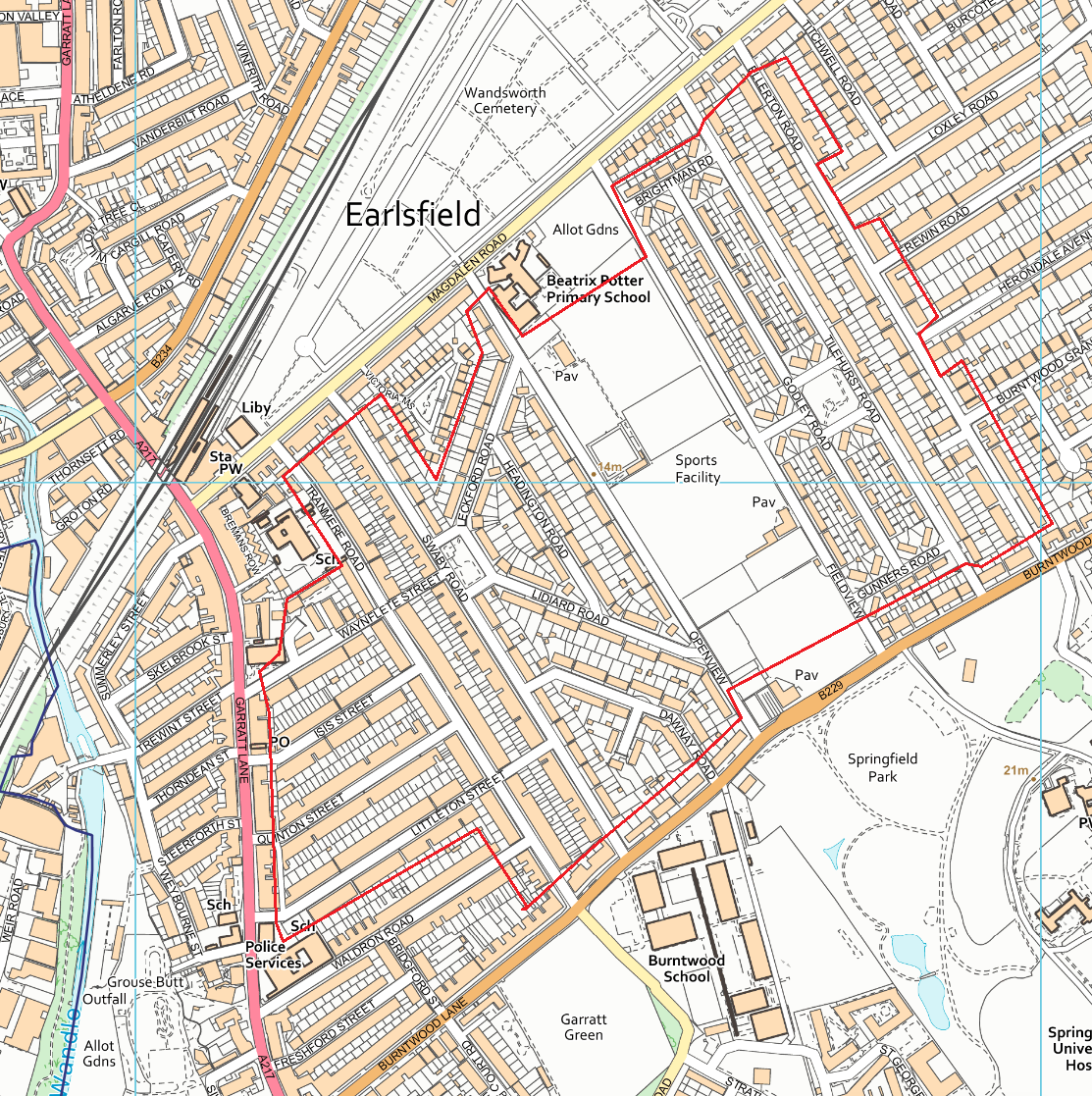
The streets within the trial area are:
- Aldrich Terrace
- Brightman Road
- Broadgates Road
- Dawnay Gardens
- Dawnay Road
- Ellerton Road
- Fieldview
- Godley Road
- Gunners Road
- Headington Road
- Isis Street
- Leckford Road
- Lidiard Road
- Littleton Street
- Openview
- Quinton Street
- St Andrew Court
- Swaby Road
- Tilehurst Road
- Tranmere Road
- Waynflete Street
The map roughly indicates the trial area.
Trial approach two
Approach: Reducing chemical weedkiller
This trial will take an entirely new approach to spraying glyphosate using a 'controlled droplet' approach.
Three annual sprays will be replaced with two in the first year, reducing to once annually in future years if continued.
The first spray using the new approach should cover the whole pavement, excluding tree pits. After that, spraying would only target visible weeds individually using a hand-held lance.
This has the potential to reduce glyphosate usage by up to 70%. The trial commenced in the second week of August.
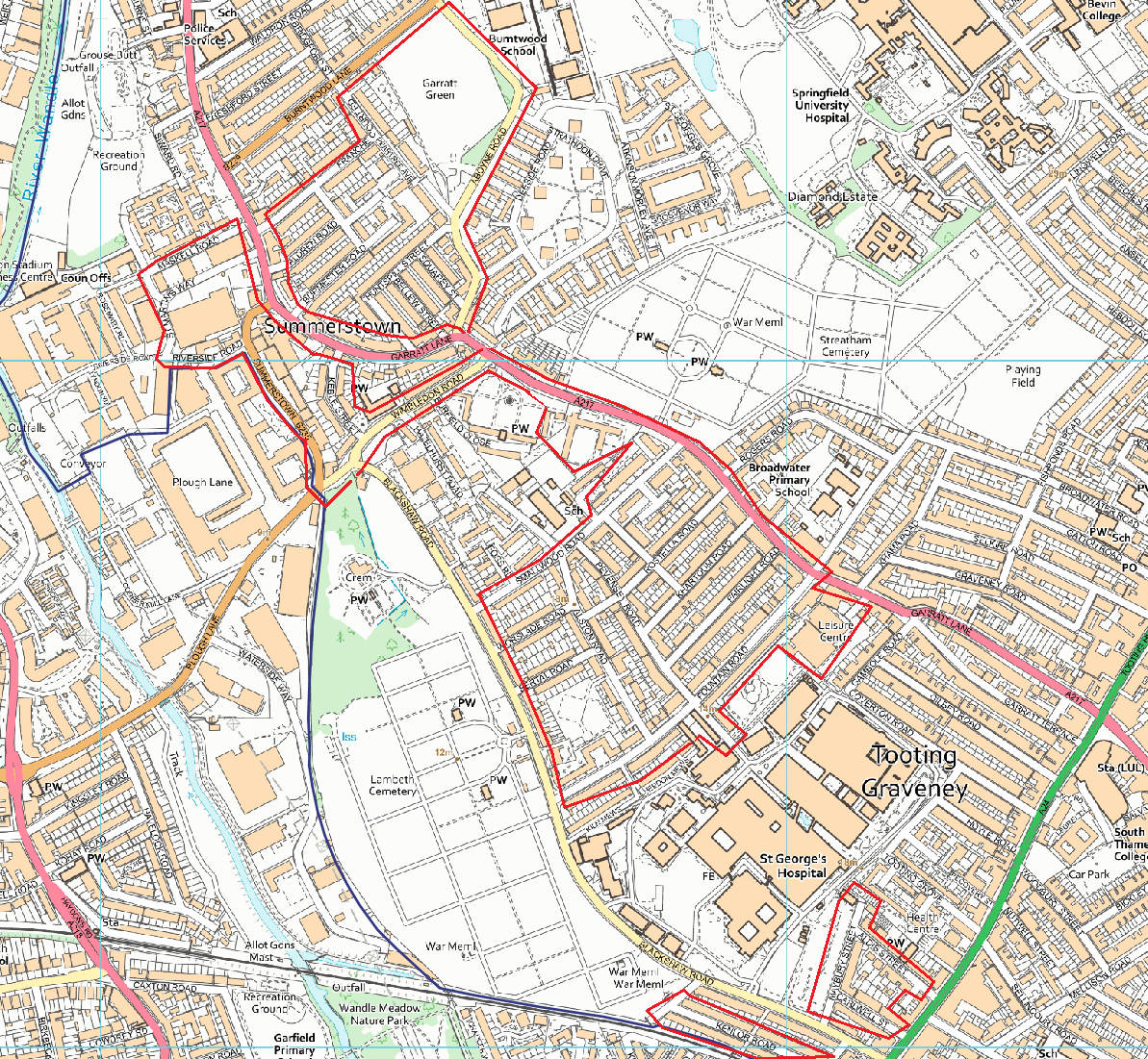
The streets within the trial area are:
- Aboyne Road
- Aldis Street
- Aldren Road
- Alston Road
- Bellew Street
- Bertal Road
- Burmester Road
- Carlwell Street
- Cranmer Terrace
- Fairlight Road
- Fountain Road
- Franche Court Road
- Garratt Lane - between Wimbledon Road and Fountain Road
- Greaves Place
- Huntspill Street
- Keble Street
- Kenlor Road
- Khartoum Road
- Maskell Road
- Maybury Street
- Pevensey Road
- Riverside Road - between St Martins Way and Summerstown
- Rostella Road
- Smallwood Road
- Squarey Street
- St Martins Way
- Summerstown
- Thurso Street
- Wimbledon Road - between Summerstown and Garratt Lane
- Worslade Road
The map roughly indicates the trial area.
Keep up to date
Get in touch with us at weedingtrialswbc@wandsworth.gov.uk if you have any questions or comments about these trials.