Wandsworth Common woodland and meadow improvements
On this page
From mid-October 2026, we’ll be carrying out woodland improvement works in an area of Wandsworth Common near Trinity Road and Burntwood Lane (The Scope).
Planned woodland works
This project is funded by the Veolia Environmental Trust Landfill Communities Fund and will create a healthier woodland for wildlife while improving access for residents.
The works will include:
- Creating a new woodland glade
- Improving two existing glades
- Installing bat boxes
- Creating a new woodchip path (to reduce erosion and direct footfall)
- Creating better habitats for birds, bats, insects and other wildlife
Why trees are being felled
Visitors will notice some tree and vegetation removal as part of the works. Selective non-native tree removal is an important woodland management technique that helps improve the overall health of the woodland.
Over time, some areas have become densely shaded as trees have matured and competed for light and space. Carefully thinning selected non-native species allows more sunlight to reach the woodland floor, encourages the natural regeneration of native species (mainly English Oak). and creates a wider variety of habitats for wildlife.
Some trees will also be used to create habitats rather than removed completely. We do this by creating cracks, cavities and deadwood habitats that provide valuable homes for bats, birds and insects. Recent surveys have shown that bats are particularly active in woodland glades, helping inform the design of the project.
Temporary access restrictions will be in place in small sections of the woodland while works are underway. There will be opportunities to get involved through volunteering following the initial phase of works.
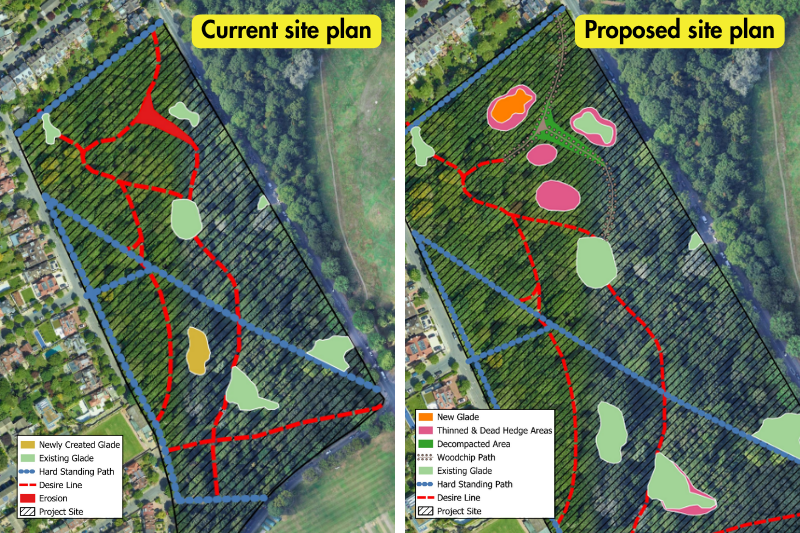
View larger PDF versions of the current site plan and proposed site plan.
Wildflower meadow works
An area between the Cat’s Back Bridge and Bolingbroke Grove will shortly be improved for biodiversity into a species-rich wildflower meadow and mounds.
Since 2020, this area has been managed as grassland to increase value for biodiversity. To create the right conditions for wildflowers, the top layer of soil will shortly be scraped to expose soils below, which are more valuable to wildflower establishment. Native grasses and wildflower will then be sown and scraped earth used to create small mounds surrounding the area.
The works will create significant long-term biodiversity benefits, but the site will change gradually as the habitat establishes. Initially the site will appear bare soil, disturbed, or rough. Scraped areas can look stark or unfinished. The use of a nurse crop will mean annual wildflowers such as Poppys and Oxeye Daisy will establish quickly, reserving room for valuable perennial wildflowers to establish over the next two years.
Once established, the meadow will support a wider range of pollinators and other wildlife, while delivering long-term biodiversity benefits for Wandsworth Common. This project forms part of the biodiversity requirements associated with the Lady Allen Playground redevelopment and delivers Biodiversity Net Gain locally within Wandsworth.
Access to the immediate area will be restricted while works occur.
Local feedback
The project has been shaped through discussions with local residents and Friends groups. Feedback consistently highlighted the importance of retaining informal walking routes through the site and strong support for improving biodiversity, particularly for pollinators through wildflower meadow creation.
In response, the project has been designed to retain and protect existing desire lines wherever possible through location of the mounds and use only limited temporary fencing where necessary to protect newly establishing plants. More than 28 unique species of native wildflower and grass will be seeded which will provide benefits to biodiversity on the common as well as aesthetically for residents’ wellbeing.
Contact
For more information about this project, contact biodiversity.wandsworth@wandsworth.gov.uk.
To find out about volunteer opportunities, email biodiversity@enablelc.org.