Tree pit planting
We welcome efforts by residents to green our streets by planting the bases of tree pits with flowers, small shrubs and plants.
Benefits
Tree pit planting can provide valuable food sources for helpful insects, transform our streets into wildlife corridors, connect our green spaces and improve the look of our streets for everyone.
Keeping trees healthy and the environment safe
Tree pits can be a great location to plant wildflowers, ferns, annuals, bulbs and perennial plants. However, it is important that the planting of tree bases does not interfere with the health of the tree or with the use of the highway. Young trees are especially vulnerable.
Follow our do's and don'ts for planting in tree pits.
Please do:
- Plant small flowers, bulbs, shrubs or plants.
- Plant nectar rich, flowering species that are good for bees
- Keep any plants under control, ensuring the footpath and roads are kept clear.
- Keep the soil level with the surrounding pavement – always keep the root flare visible. Adding soil or mulch against the tree trunk can smother the root flare, cause bark rot, and encourage fungal infection
- Regularly water the plants in the tree pit, especially if the tree is young - plants and shrubs may start to outcompete street trees for water, especially if the tree is newly planted. If residents are regularly watering the plants around the base, then this should not be an issue, and the young trees can live happily with the plants around their base
- Keep the pit tidy, weeded, and free of litter
- Tie up a green ribbon around the tree trunk if you plant it
Please don't:
- Add chemicals, pesticides, or fertilisers
- Introduce any invasive non-native species (INNS)
- Install any raised edging around the tree pit - this can create a trip hazard for pedestrians and may have to be removed
- Raise the soil level in the tree pit – doing this can hold moisture against the trunk and will start to decay the base of the tree. This can be disastrous for trees, both young and established
- Add landscaping materials like pebbles or gravel
- Plant spikey or poisonous species – this may harm other people or animals
- Dig too deep – this may damage tree roots
Successful examples
Some ideas to inspire you with your planting.
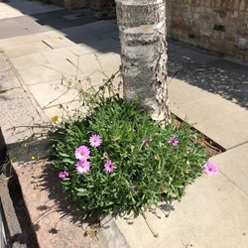

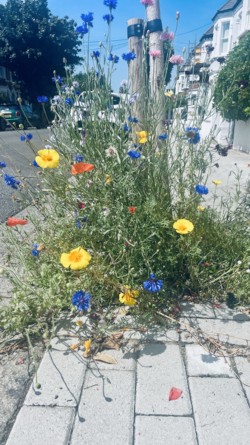
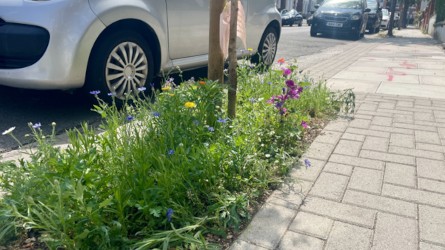
Image credit: Beautify Balham
Recommended species
Our Trees team has compiled a list of plants that are well suited to growing in tree pits:
- Papaver/Poppy
- Nemesia
- Centaurea/Cornflower
- Calendula/Marigold
- Centranthus/Red Valerian
- Foeniculum/Fennel
- Lavendula/Lavender
- Linaria/Toadflax
- Lychnis/Campion
- Zinnia
- Cyclamen/Sowbread
- Erysimum/Wallflower
- Geranium 'Bill wallis' lilac or 'Rozanne'
- Achillea 'walther Funke' (Yarrow)
- Nepeta/Cat mint
- Bellis perennis/Daisy
- Silene/Red Campion
- Calendula officinalis/Marigold
- Aster ageratoides
- Myosotis arvensis/Field Forget-me-not
- Centaurea/Knapweed
Possible damage
Street trees require regular inspection and maintenance work. Thoroughly inspecting the base of a tree is an essential step in the health and safety surveys our officers carry out.
Every care will be taken by tree officers and the contractor’s operatives, but there may be times where plants are damaged or pruned.
Chemical weed spraying
Residents can now entirely opt out of our scheduled herbicide spraying on their street - these sprays happen three times a year.
Find out more about opting out of scheduled herbicide spraying.