Heatwave
Although warm weather is usually thought of as a good thing, severe hot weather can have negative health effects. A heatwave can affect anyone, but those most at risk from hot weather health harms include:
- Older people (people aged 65 and over)
- Those who struggle to keep cool, including but not limited to babies, the very young and the bed bound
- Pregnant people
- People who have serious or long-term illnesses
- People who spend a lot of time outdoors or in hot places, such as those who live in top floor flats or have jobs outside
Top tips for coping in hot weather
Advice for being safe in the heat includes:
- Stay out of the sun between 11am and 3pm when UV rays are strongest.
- Keep indoor cool, close curtains on sun-facing rooms; it might be cooler outside!
- Wear UV sunglasses, a wide-brimmed hat, and light, loose-fitting cotton clothes. Apply SPF30 sunscreen with UVA protection.
- Stay Hydrated. Drink plenty of fluids and carry water when travelling.
- Check on vulnerable individuals like older adults, young children, and those with serious illnesses.
- Never leave anyone in a parked vehicle. This includes infants, young children, and pets.
- Store temperature-sensitive medicines in the fridge.
- Avoid strenuous activities during the hottest parts of the day.
- Find Cool Spaces London where you can shelter from the sun, cool down, rest and take respite on hot days.
The beat the heat: hot weather advice website provides further information and resources to help people stay safe in hot weather, including a home checklist, and poster. The advice and resources are available in other languages, easy read format and BSL on the website.
Watch out for signs of heat-related illness
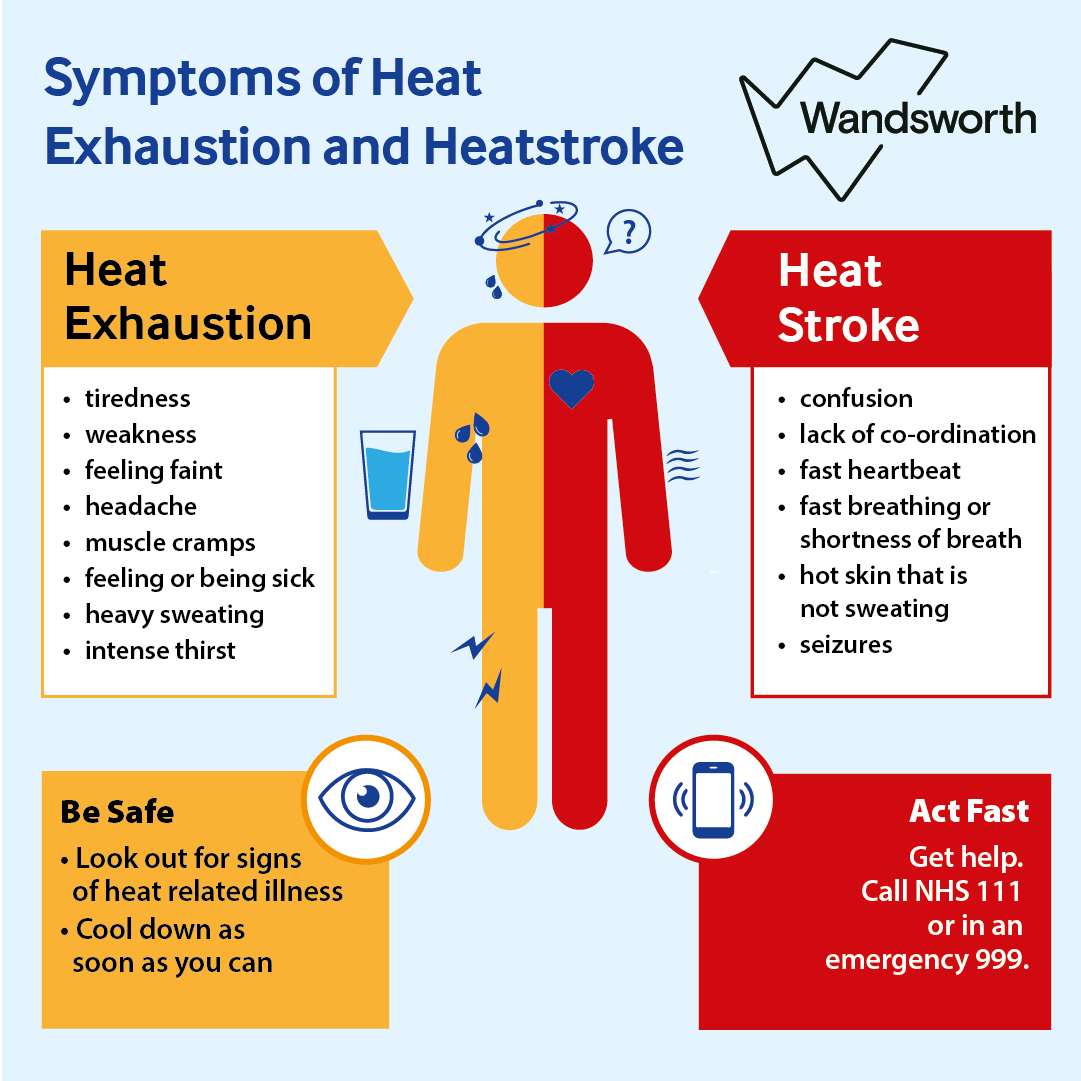
If you or someone else feels unwell with a high temperature during hot weather, it may be heat exhaustion or heatstroke.
You can find out about the signs of heat exhaustion and heatstroke, and when to get help.
Stay safe when swimming
Swimming pools, rivers, lakes, or the sea can be a fun way to cool down when the weather is hot. However, summer months are also associated with an increase in drowning accidents. Follow these tips to stay safe:
- Always look for warning and guidance signs
- Only enter the water in areas with lifeguard cover
- Never enter the water after drinking alcohol
- Check Swimfo to look up details of designated bathing water quality by name or location
You can find more information on safe summer swimming from the Royal Life Saving Society (RLSS) and the UKHSA Beat the Heat webpage.
Stay safe in hot weather infographics
We're excited to share that our Public Health team, in partnership with the Voluntary and Community Sector (VCS), has created a set of infographics designed to help provide information about how to stay safe and cool during hot weather in an easy-to-understand format.
There are five infographics, which are designed to be shared on social media and printed:
- How to keep your home cool
- How to prepare for hot weather
- How to stay cool
- Looking after children in hot weather
- Symptoms of heat exhaustion and heatstroke
If you would like to receive printed copies, email healthprotection@wandsworth.gov.uk.
Cool Spaces map
Cool Spaces are indoor spaces that provide shelter from the sun on hot days. You can see Wandsworth spaces on the Mayor of London's map.
How to register as a Cool Space
You can register your venue as a Cool Space on the Mayor of London website.
To register as a Cool Space, your venue must:
- Be open to all free of charge
- Have free seating for rest and recovery from the heat
- Have free drinking water available
- Be staffed during opening hours
- Be cooler than the outdoor temperature
You will need to confirm:
- Estimated seating capacity
- Accessibility information (is it suitable for wheelchair users, for example)
- Opening hours of the venue
- Contact email address
- If the venue is specifically welcoming to any vulnerable groups
- If toilets are available on site or nearby
- Information about any other cooling facilities on site
Guidance for voluntary sector
We have developed a checklist and guidance for voluntary sector organisations on how to prepare for and respond to extreme heat events.
More information
For more information:
- Met Office alerts - stay prepared for heatwaves and extreme weather conditions
- NHS summer health advice - tips on staying healthy during the summer
- Met Office health and wellbeing pages - useful information on how to cope with extremely hot weather, hay fever, pollen, UV lighting and many more
- Helping someone sleeping rough in hot weather - guidance on supporting homeless individuals during heatwaves
- British Red Cross emergency app - download for heatwave alerts and advice
- Driving in Adverse Weather Conditions - consult the Highway Code for safe driving tips
- Overheating adaptation guide for homes - Shade the UK
View the Adverse Weather and Health Plan and further government resources including leaflets and posters.